Many people know this moment, even if they have never named it. You are making dinner and following all the rules you set for yourself, but something doesn’t feel right. The meal looks good on paper. It meets all the requirements. It goes with the plan. But the experience is tense. Not happy. Heavy in a way that doesn’t have anything to do with calories.
That feeling is often what makes the difference between control and care.
Control in the kitchen looks neat. Works well. Wow. Care looks softer. More messy. Not as clear. And in today’s food culture, it’s much easier to confuse control with health.
When rules take the place of listening
Diet rules are tempting because they promise to make things clear. Eat this. Don’t do that. If you follow the structure, everything will work out. Rules can help people who feel overwhelmed or unsure. They stop the constant questioning.
But rules also make it hard to listen.
It’s harder to see what’s really going on when you’re focused on making a system work. People ignore hunger. Satisfaction is no longer critical. People see emotional cues as problems rather than as information.
This happens quickly in homes. One person’s rules put pressure on another person. Kids know right away. They learn that food comes with regulations rather than love.
Food gets hard. Conversations get shorter. The kitchen is no longer a place to connect, but a place to follow rules.
People don’t care about health enough for this to happen. A lot of the time, it’s because they care too much about doing it “right.”
Attention, not obedience, is what care needs.
Cooking with care starts in a different place. Instead of making people do things, it begins with paying attention.
Who is going to eat tonight? How do they feel? What do they need at this moment? What will really help?
There are no set answers to these questions. Every day they change. Sometimes every hour. That’s why care seems more complicated than control right now.
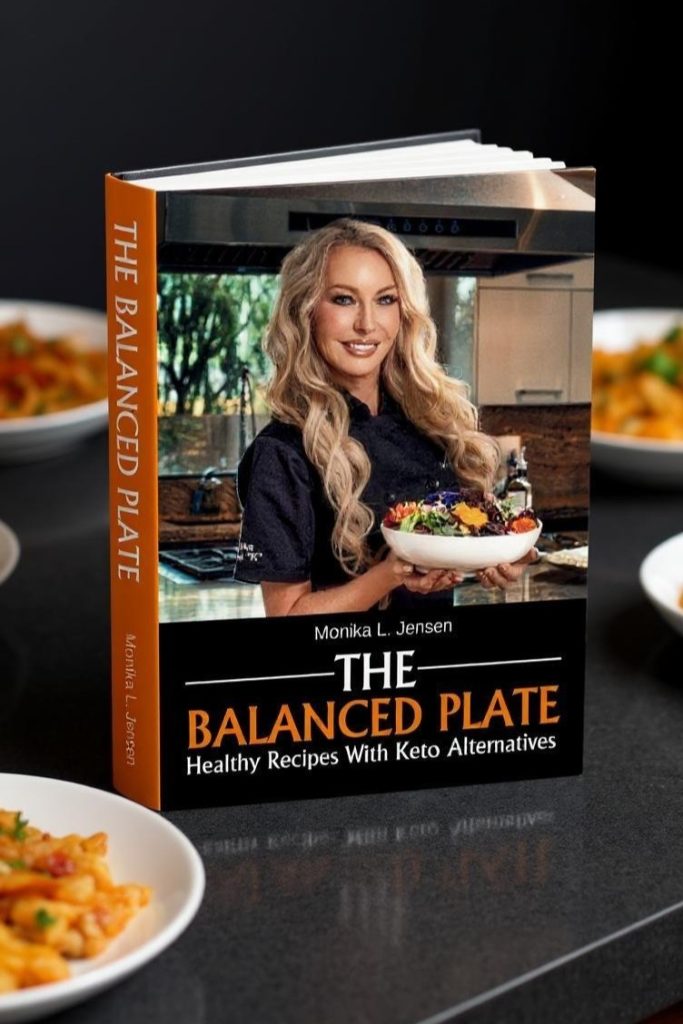
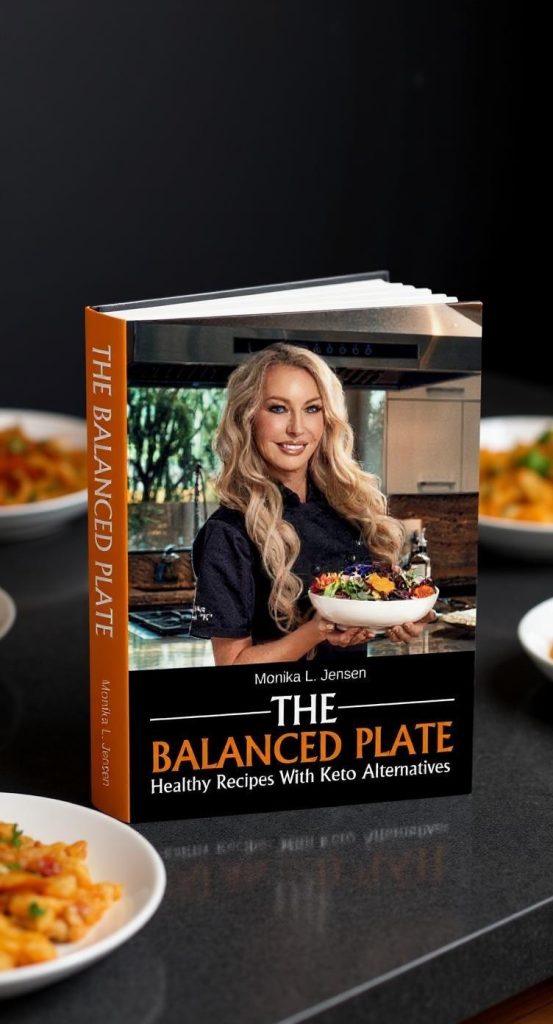
Even though it never says so, Chef Monika Jensen The Balanced Plate: Healthy Recipes With Keto Alternatives is based on this difference. The book always chooses flexibility over strictness.
Recipes are written as complete meals that fill you up. Keto options are given as suggestions, not rules. There is nutritional information, but it isn’t the primary focus. The reader doesn’t have to make the best choice every time.
The book, on the other hand, assumes that the cook can hear.
The emotional work that goes into cooking
People often don’t realize that cooking requires a lot of emotional work. Thinking about how people will react. Making changes without saying anything and making food that everyone at the table can eat without worry.
This work is most evident in homes where people eat a variety of foods. Someone might need to be aware of carbs. Another person might not. Someone might be getting better after being sick. Someone else might need some comfort.
It doesn’t work very often to try to control all of that with strict rules. It causes problems. Someone always feels like they are in charge.
Care looks different. Care changes. It lets things change without comment. It doesn’t make differences into problems; it respects them.
People who read The Balanced Plate often talk about this change without using the words. They say dinner is more peaceful because they no longer have to explain their choices, and cooking makes you feel lighter.
That lightness means that care has taken the place of control.
Not just data, but also food
Data is the foundation of modern wellness culture. Numbers. Ratios. Goals. That information is helpful. But when data is the only thing that speaks, it drowns out other ways of knowing.
Your body talks to you in ways that numbers can’t fully show. Power. Mood. Contentment. Comfort. These signals are essential.
Listening to those signals, even when they don’t fit perfectly with a plan, is what care means.
The Balanced Plate pays tribute to this complexity. It tells you what the food is made of without making it look like a spreadsheet. It lets recipes change without making anyone feel bad.
That kind of flexibility teaches a different skill. Not following orders, but making good decisions.
Why control often looks like discipline
People often call control discipline. But discipline that doesn’t care becomes weak. It can’t change. It falls apart when it gets too much.
Many people who have been on strict diets know this pattern. At first, the structure makes you feel strong. It gets tiring over time. One mistake makes you feel guilty. One bad meal makes you feel like a failure.
Taking care of someone doesn’t cause that spiral. It lets you change things without getting in trouble.
This doesn’t mean getting rid of all structure. It means using structure to help rather than to force.
Jensen’s method shows how to find this balance. The book advises without being too strict. It gives you choices but doesn’t rank them. It respects the reader’s right to choose.
That respect makes cooking feel different.
How to teach trust at the table
Children need to know the difference between control and care. Kids learn how to deal with food long before they learn about nutrition.
Kids learn that food is something to be careful with, not something to enjoy, when strict rules govern meals. Anxiety comes on early.
Cooking based on care teaches something different. It teaches people to trust each other. It teaches how to listen. It teaches that food meets needs instead of forcing behavior.
The Balanced Plate backs this up by prioritizing comfort and flavor. Meals feel normal. Changes are quiet. No one is called out or labeled.
That place is essential. It affects how people acquire food as they grow into adulthood.
Letting go of enforcement
Many cooks find it hard to stop enforcing rules. The idea that everything will fall apart if you don’t hold the line.
In reality, the opposite is often true. Resistance fades as enforcement weakens. Food doesn’t feel as charged. People are more likely to pay attention to their bodies.
Care makes people work together. Control leads to compliance, which is not very strong.
People often say that eating is easier when they stop thinking of meals as good or bad. It feels less heavy to make decisions. It doesn’t feel like a test to cook.
That isn’t a coincidence. It is how care affects people’s feelings.
Food that goes beyond nutrients
Food is more than just nutrients. It has comfort, pleasure, connection, and ease.
Cooking that focuses on control often turns food into numbers. Care-focused cooking broadens the view.
The Balanced Plate works from this bigger picture. It knows that health isn’t just what you eat, but also how you feel about what you eat.
That level of understanding is what makes the book last. It is not meant for a phase. It was made for real life.
Picking care every day
You don’t choose between control and care just once. It is something you do every day.
Some days need more structure. Some people need more freedom. Care means responding instead of enforcing.
If cooking has become stressful or tedious, it could be a sign that control has taken over, where care is needed.
This book gives you a way to reset, not by making more rules, but by taking away stress.
The Balanced Plate: Healthy Recipes With Keto Alternatives by Chef Monika Jensen is now for sale on Amazon. It reminds people who are ready to cook with more listening and less enforcing that care, not control, is what really nourishes.