There is a kind of tiredness that isn’t caused by time. You can sleep for eight hours and still feel it. It is in your chest, not in your body. It shows up around five or six in the evening, which is when the question comes up.
What’s for dinner?
That question means more than just logistics to a lot of people, especially those who cook for others a lot. It has a duty. Expectation. Worry is a quiet fear of making a mistake.
It’s not just about the food when you feed the people you love. It’s about taking care. And caring comes with a lot of weight.
When cooking becomes work that makes you feel bad
People often think of cooking as a job. A job. Something you either like or can deal with.
But giving food to people you care about is rarely neutral.
You think about who had a rough day. Who is under a lot of stress? Who is ill? Who needs to feel better? Who needs a plan? Who needs to be flexible? You think about your health, your time, your money, and your peace of mind.
This invisible mental load builds up over time. It doesn’t say anything. It just builds up.
When a meal goes well, it gets eaten up. It feels personal when it doesn’t.
This is why many cooks feel bad even when they haven’t done anything wrong.
The guilt that no one talks about
People often feel guilty about food after eating. But there is another kind that doesn’t get as much attention, the guilt of giving food to others.
Did I make this too heavy? Not heavy enough. Not interesting enough. Too much of a good thing. Too harsh. Did I make everyone happy? Did I let someone down?
The person behind the stove thinks about these things a lot more than the people at the table do.
This guilt grows in homes where people have different dietary needs. One person’s worry about their health seems like another person’s loss. You try to keep everything in balance, but when you can’t, guilt sets in.
This guilt isn’t because of failing. It comes from caring a lot.
When care becomes stress
Care is meant to make you feel supported. But when it gets mixed up with unrealistic hopes, it becomes stress.
Pressure to feed ideally. To keep everyone safe and healthy. To keep the peace. To guess what people need before they say it.
This is when cooking starts to feel hard.
People don’t care too much, which is the problem. They have been given systems that prevent them from making mistakes.
Strict food rules make guilt worse. There must be a wrong way to eat if there is a right way. If there is a perfect balance, then any change feels like a failure.
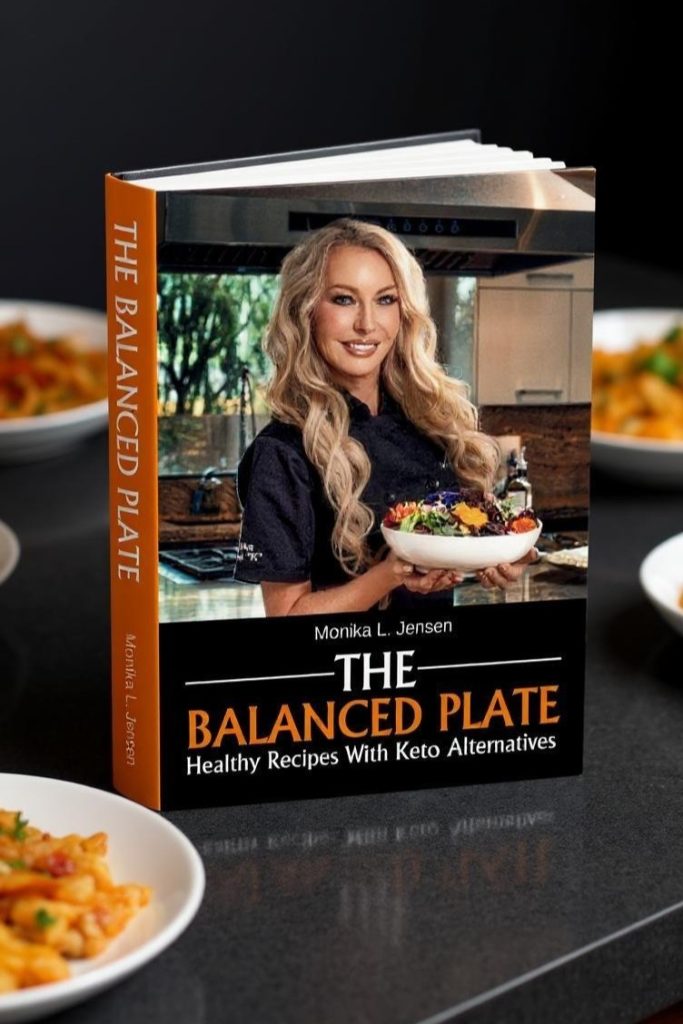
Chef Monika Jensen’s book “The Balanced Plate: Healthy Recipes With Keto Alternatives” gives you a quiet break from this busy life.
Letting go of the thought that you have to do it right
One of the most caring things about Jensen’s method is what it doesn’t ask for.
It doesn’t ask the cook to make sure the system works. It doesn’t make meals seem like punishment. It doesn’t make the person cooking the gatekeeper.
First, recipes are written as full meals. You can choose to use keto alternatives, but you don’t have to. There is nutrition without punishment.
This structure takes away the idea that the cook is in charge of everyone’s choices. The cook, on the other hand, makes the food. People meet it where they are.
That change is small. It is also intense.
The relief of having to share responsibility
When food systems are inflexible, one person is in charge of everything. The one who makes plans. The one who makes sure. The one who changes.
Systems that are flexible share responsibility.
The Balanced Plate lets everyone eat in a way that works for them. There is a lower-carb option for people who need it. Some people eat the dish as is. Nobody has to explain their plate.
This makes it easier for the cook to handle their feelings. It makes dinner a shared experience again, rather than a show.
People who cook from this book often say they feel lighter. Not as worried. Not as concerned with making everyone happy. More here.
That lightness doesn’t mean you don’t care. It’s about limits.
Giving people food is not a test of morality.
One of the worst ideas in food culture is that you can fail to feed people and still be a good person.
That story makes you always watch yourself. Every decision feels heavy. Every complaint seems like proof.
In real life, giving people food is a way to show you care. It doesn’t mean anything about how much you are worth.
You can still love someone even if their meals aren’t perfect. Dinner doesn’t have to be fancy to be good for you. People can eat what they want and still feel like they belong.
The Balanced Plate gently shows how this is true. It doesn’t make health seem more critical. It makes a difference. It takes away moral language.
That lack of judgment is very comforting for people who have felt guilty about food for a long time.
Care without giving up yourself
Many cooks have a quiet belief. That caring for others means giving up something for themselves.
Cooking when you’re tired. Planning beyond what is possible. Taking in anger without saying anything.
A food culture that glorifies effort and control reinforces this belief.
Taking care of yourself doesn’t have to mean running yourself down.
One way to show you care is to choose flexible meals. Like giving up the idea of being perfect. Like letting people meet food where they are.
Jensen’s recipes help with this kind of care. They are made to work. To repeat it. To change.
They don’t ask you to give more than you can.
The kitchen’s emotional honesty
The kitchen often shows how you really feel. When cooking seems too much to handle, it’s usually not about the food. It’s about the weight that’s being carried.
Knowing that weight is the first step to letting it go.
The Balanced Plate doesn’t treat cooking as neutral. It understands how feeding people makes them feel.
You can hear that respect in the tone. Calm. Not judging. Useful.
It says, without saying it, that you are doing enough.
Getting rid of guilt at the table
Guilt grows in silence. Guilt builds when cooks think they are the only ones who have to take care of things.
Flexible systems encourage conversation instead of control. They enable people to own things together.
When meals can be changed, guilt loses its hold.
This doesn’t mean you care less. It means caring in a way that lasts.
Giving food with presence, not pressure
Not every meal that meets all the rules is the most nutritious. They are the ones that make people feel comfortable and seen.
That ease is more important than most food advice suggests.
The Balanced Plate is a way to feed the people you care about without having to deal with the emotional burden alone.
This book will help if cooking has become too much for you, not by telling you to do better, but by reminding you that care doesn’t have to be perfect.
You can now get “The Balanced Plate: Healthy Recipes With Keto Alternatives” by Chef Monika Jensen on Amazon. It offers a gentler, more sustainable way forward for anyone who has ever felt the quiet weight of feeding people they care about.