There are times when people talk without saying anything. You know the type. After a long day, someone makes your favorite meal. When you’re sick, a meal shows up. When things are unclear, a familiar recipe shows up at the table. Nothing needs to be said. The message gets through anyway.
Food is one of the first languages we learn. We feel care, comfort, and belonging through meals long before we can put them into words. Food still speaks for us as adults when words aren’t enough.
It’s easy to forget this in a culture that mainly talks about food in terms of rules, labels, and results. But if you take all of that away, cooking is just talking. Many people stay in touch by eating together.
What we say with food
Think about the last time someone made you dinner. Not a dinner for show. Not a special day. Just a meal that you made because you had to.
What did it say?
It could have said, “I saw you were tired.”
It might have said, “I remembered what you like.”
It could have said, “You are welcome here.”
People don’t often say these things out loud, but they feel them deeply.
The language starts to flatten when cooking becomes strict or follows rules. Meals turn into transactions. Delivery of fuel. Following the proper diet. Something vital gets lost in translation.
When food stops talking
In today’s food culture, meals are often seen as problems to be solved. Make this better. Get rid of that. Get better.
In that context, food stops responding to people and starts responding to systems. Instead of needs, numbers are used to build plates. People explain choices instead of feeling them.
This change makes things less close, especially in homes where people live together.
A person’s diet can be a problem for someone else. Changes feel heavy. There is commentary with each meal. Food becomes a source of tension instead of connection.
A lot of people feel this loss but don’t know what to call it. They can tell that dinner feels different now. Not as easy. Less grounding.
They don’t need a recipe. It is a talk.
Listening while cooking
Listening is the first step to good communication. The same goes for cooking.
Paying attention is what cooking-as-communication means. Who is eating? How they feel. What they need right now.
That need could be physical. Power. Help with blood sugar. Comfort. It could be emotional. Knowing. Warmth. Simple.
Being able to listen while eating means being flexible. It means being open to change without making those changes into statements.
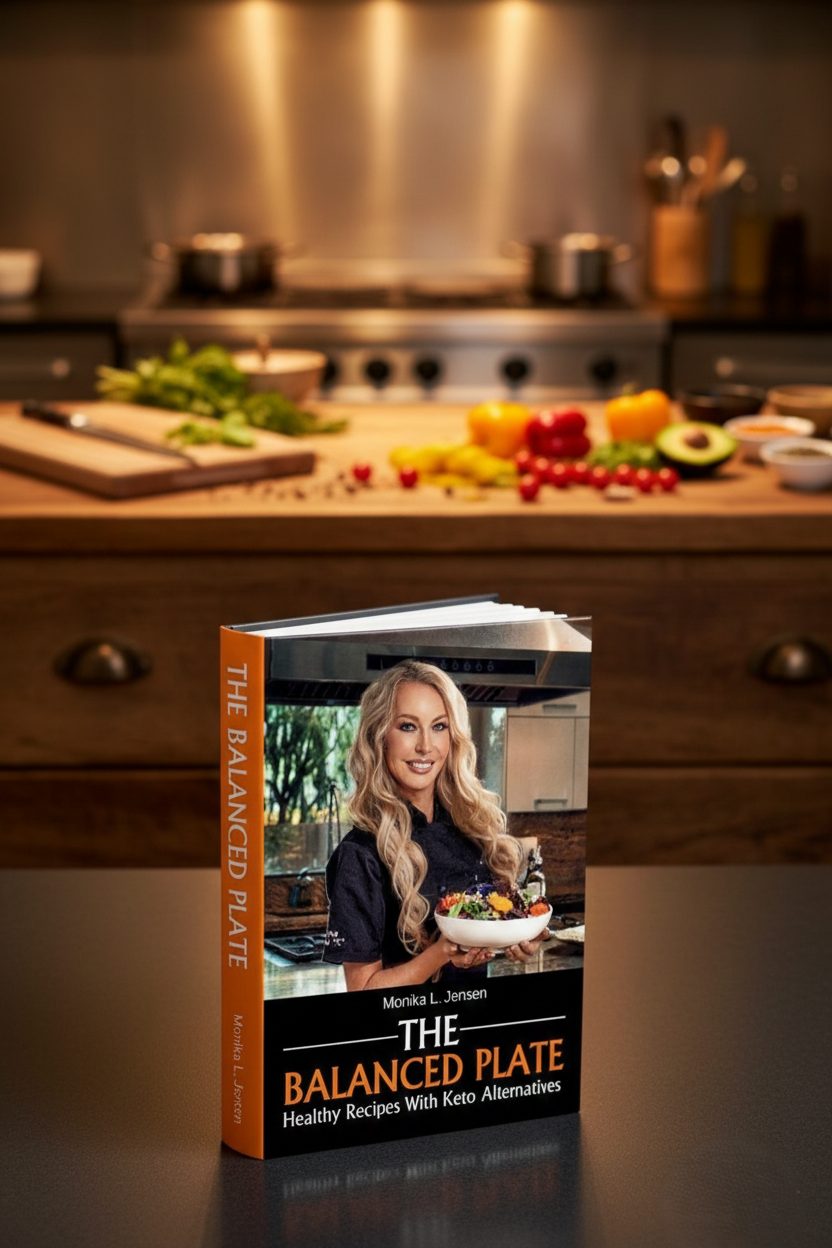
Chef Monika Jensen book, The Balanced Plate: Healthy Recipes With Keto Alternatives, is very good at this.
The book is based on the idea that one meal can mean different things to different people without falling apart. First, recipes are written as full meals. Keto alternatives show up as notes that are not corrections.
This structure lets the cook respond rather than enforce. To listen instead of saying.
One meal, many messages
In many homes, one dinner is about talking to a lot of people at once.
To one person, it says, “I thought about your health needs.”
To someone else, “I didn’t take away what you love.” To a child, “You are safe here.”
This level of complexity is complex for rigid systems to handle. They want things to be in line. They need everyone to speak the same language.
Flexible meals make translation possible.
The Balanced Plate gets this right away. It makes recipes that can handle changes without making a fuss. You can change a dish without telling anyone. No one has to explain what’s on their plate.
The meal is still shared. The message stays open to everyone.
Food as a way to talk about culture
Food doesn’t just show you care; it shows you care. They talk about culture.
Spices tell tales. Techniques have a history. Ingredients link us to people and places outside of the table.
When health cooking takes food down to its most basic form, that cultural conversation stops. Food loses its voice.
Jensen’s method keeps that voice the same. The book doesn’t hold back when it comes to global flavors. Za’atar. Vadouvan. Miso. Sumac. Black garlic. These ingredients are not new or different. People think of them as part of the language of food.
This is important because culture and food are not separate. It is a part of it.
People feel seen when they see their food heritage honored. Trust grows when familiar flavors stay the same.
The emotional work that goes into eating together
Talking through food takes work. It isn’t passive. Someone needs to see it. To look ahead. To make changes.
People often don’t notice this kind of emotional work, especially in families. The person cooking turns needs, wants, and expectations into words.
No one says anything when meals work. When they don’t, everyone sees it.
The Balanced Plate makes it easier for people to talk to each other, which helps with this hidden work. You can change recipes. The instructions are clear. You don’t have to do anything.
Many people who read the book say that cooking from it makes things less tense. How dinner talks make you feel more at ease. How to make meals less tense.
That ease isn’t about being simple. It’s about getting things in line.
When food becomes a conversation instead of an argument
Food talks often turn into arguments in many homes. Should we eat this? Is that okay? Is this better or worse?
Debate means that there are winners and losers. Dialogue means understanding.
Cooking as a conversation means recognizing differences without trying to fix them for good. It means letting meals change based on the situation.
This is an excellent example of this way of thinking. They let the cook say, “This is an option if it helps,” without saying, “This is the right way.”
That tone changes everything about the conversation.
Getting it without an explanation
Food can say a lot of things, but one of the most powerful is “I understand without needing to explain.”
You don’t have to explain why you need something else. You don’t have to explain why you made a choice. The meal works with it.
This is respect on a plate.
People who read The Balanced Plate often talk about how changes make things quieter, how no one feels singled out, and how meals feel more welcoming.
That inclusion isn’t loud. It doesn’t have to be. It shows up in how easy it is.
Cooking as a way to teach communication
Meals are among the first places kids learn to deal with differences.
Kids learn that being different is a problem when food is scarce. They know that differences are normal when food is flexible.
Kids learn to listen when they cook together. To change. To respect what other people need without making a big deal out of it.
This lesson goes beyond the table.
Why eating together is still important
In a world where schedules don’t often match up and attention is split, shared meals are still one of the few places where people can connect.
They don’t have to be fancy. They need to be planned.
People feel grounded when meals show they care. People pull away when they feel like they have control.
The Balanced Plate backs up the first one. It keeps the focus on the rules, not the relationship.
Letting food talk again
You don’t need a degree in philosophy to cook well. You need to pay attention. Being flexible. A desire to listen.
It’s not about saying the right thing when you cook to talk. It’s about being honest in your response.
If meals at your house have started to feel tense or like a business deal, ask what language they are speaking.
This book shows you how to change that language. In a quiet way. Softly. Without causing a fuss.
You can now buy “The Balanced Plate: Healthy Recipes With Keto Alternatives” by Chef Monika Jensen on Amazon. It reminds people who think meals are more than just fuel, and that understanding can happen at the table, that food still knows how to talk.